Why Light Theme
Table of Contents
I’m bullish on light colorscheme. I put Solarized Light on almost everything I use: Terminal, NeoVim, VSCode & derivatives, Slack, this blog 💭 💭 Did you notice that when you first see this webpage? , etc… I attribute this to my rather okay eyesight despite looking at monitors for no less than 12 hours a day, despite using a bunch of crappy screens 1 1 The most expensive screen I use cost around USD 150, is 2K 27 inches and has a last-decade IPS panel. with terrible backlight. Why spend hundreds – thousands of dollars on pixels and not even turning all of them up?
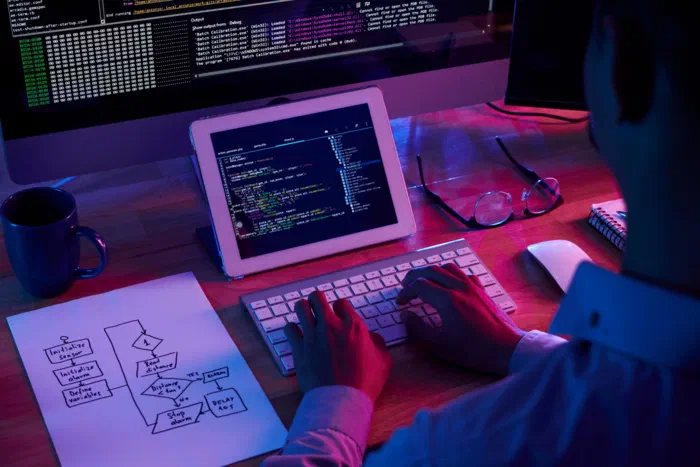
Cue the joke about light attracts bugs. Cue the joke about light-mode developer being untrustworthy.
Done? Let me explain why it is actually beneficial to use light mode.
Eye strain
People keep saying shits like:
Buh much light hurt the eyes, less light make eyes go relaxed.
Duh, if the screen is the only light source around you, that’s gonna hurt your eye for sure. If you do everything in a dark room, any reasonable amount of photon will toast your retina for sure. The solution for that is not to dim everything around you to a hazy gray, but actually open the fking window and let in a bit of sunlight 💭 💭 And if you are coding at night, guess what, humanity invented something called light bulbs since the 1800s . You are the reason coders get the reputation of being unhygienic gremlins living in a basement.
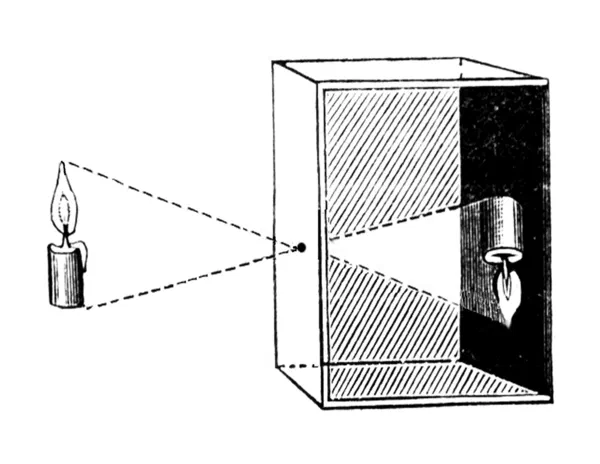
Au contraire to your belief, dark mode will strain your eyes more while reading text. Think of the eye as a camera. In order to capture a clear image, it has to collect enough photon into the sensor (in this case, the photoreceptor cells). If you try to read bright letters on a dark background, obviously the photon count/screen area ratio will not be enough, so the eye’s aperture — our pupil — has to dilate
2
2
The medical term is miosis.
to collect more light in. This has the effect of allowing a lot of incidental photons, from multiple angle, to enter our eyes, and the result is a more blurry image. On the other hand, light mode allow the pupil to relax, shrink to a very small slit, and the result is a setup similar to a pin-hole camera
3
3
A fun fact about our eyes: it always work like a pin-hole camera, and the image always falls onto the sensors (retina) reversed. The brain knows how to mirror back those image into the right orientation. Furthermore, if you put on an inversion glass that mirror your vision, it takes the brain around
3 days to get use to it
with razor-sharp details.
There’s a difference between using the light mode vs turning the brightness to maximum. You can have dim monitor on light mode. The key here is to set the brightness agreeably with your surrounding, which — thankfully — all the modern devices can already automatically adjust this for us with their ambient light sensor.
Why Solarized Light
Still on the topic of eyestrain. It’s has been studied 4 4 Dark vs. Light Mode on Smartphones: Effects on Eye Fatigue that the light mode has the notorious reputation of blasting your retina with fiery-white photons. The problem with those studies is that they don’t really describe how contrasting the colorscheme is. A full on white & black contrast feels much different comparing to, says, a softer black/brown on a sepia color.
I’ll quote Solarized’s creator Ethan Schoonover here, because he really described it in the best way possible
On a sunny summer day I love to read a book outside. Not right in the sun; that’s too bright. I’ll hunt for a shady spot under a tree. The shaded paper contrasts with the crisp text nicely. If you were to actually measure the contrast between the two, you’d find it is much lower than black text on a white background (or white on black) on your display device of choice. Black text on white from a computer display is akin to reading a book in direct sunlight and tires the eye
Now that we have established that there are good light-mode and bad light-mode, let’s talk about why Solarized Light is a good light-mode colorscheme.
Right kind of contrast
The quote above highlighted a certain reason for eye fatigue: looking at colors with too much contrast. Ethan however, designed Solarized with a very soft brightness contrast, by calculating the difference between CIELAB lightness
- base3 (default background color) has 97% lightness
- base01 (default text color) has 45% lightness
The difference is 52% in lightness. This is less harsh comparing to, for example, the Github colorscheme, that pit 36.5% text on top of 100% background. And half as starking as pitting pure black on top of pure white (that’s a 100% brightness difference) 5 5 I’m not a color theory expert, but I think that the difference in CIELAB lightness doesn’t obey a linear relationship. .
However, Solarized light isn’t low contrast. All the colors are very discernible from each other. This is because it is selected to maintain good hue contrast, by means of a colorwheel. This is to say, at appropriate level of brightness, a shade of red will still be very contrasting against a shade of green. The aforemention color pair pass the WCAG Contrast Metrics with pretty good result.
Blue light
Blue light has been the buzzword in almost every vision-protection thing on the market in the last decade. A big deal about the blue light spectrum is that it boost our wakefulness, kind of like an electromagnetic caffeine. From sunlight, within a healthy dose, it is essential for our body to maintain a circadian rhythm. But with the ubiquity of LED light & digital screens, the blue light crept into our night time and cause us all sort of sleeping trouble.
The solution the world has? Ranging from blue light blocking eyeglass lenses to color temperature changing feature of our phones, it aims to reduce the amount of blue light reaching our eyes, either from the source or before the destination. The end result would be a screen that is yellow to reddish.
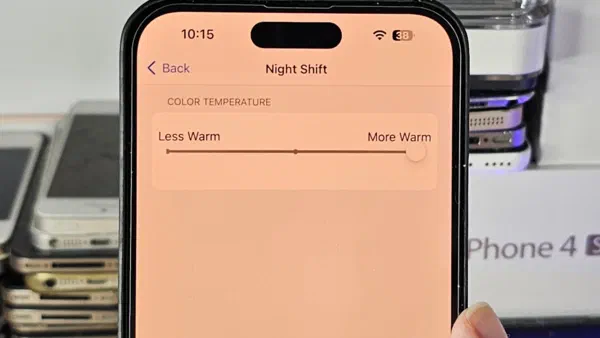
You know what is also yellow to reddish? That’s right, the Solarized Light colorscheme. You reap the benefit of Night-shift without having to turn on Night-shift 💭 💭 Or turn on both to get the maximum value, that’s what I do anyway
I don’t have enough data to talk about how un-blue Solarized Light is, and therefore can say with 100% confident that it is effective in reducing your bluelight intake. But from my personal experience after long period of coding, Solarized Light has a visual-soothing quality of looking at sunlight 💭 💭 That’s where it take its namesake to reading old book. Your mileage may vary.