Thursday, 21 May 2026
On using LLM
I usually say this. LLM to people is almost like the Bloomberg terminal. To traders who know what to do with it, the terminal give them invaluable information that they know how to process, manipulate and act on. To lay people like me those are just fancy data table.
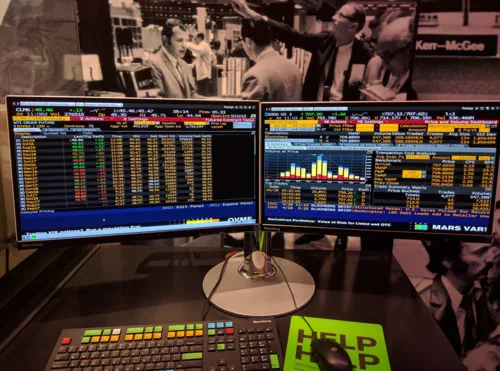
I saw a post from OpenAI where they use their LLM to disprove an Erdős’s conjecture. The LLM is truly a Bloomberg terminal for the mathematicians working on the problem, where its computation capability far exceed a human’s mind. It is a very good tool for collecting data and perform long-horizon reasoning on it.
On the other hand, I have been spending my recent days working with some of the worst codebase in the history of mankind. This is enabled by somebody not knowing/not care enough for consistent code, instead just unleash a LLM to do whatever they need at the time. The LLM, being a lazy creature, without a model of the whole codebase inside its context, performs the most local changes needed to satisfy the immediate request. The result is a string processing function that does practically the same thing being duplicated across 6 different files, unused class littered everywhere, and somehow there are 3 places that make the same connection to a database.
This is fully a context management problem. LLM-assisted software development can work and can produce satisfactory results. However, this requires careful planning of the codebase, careful document management, and the utmost important thing is to ensure the agent have an outline of the whole codebase when making changes. You have to make a conscious effort to steer the agent toward generating good code.
LLM is a multiplier of your decision making/intent. You exert 1 unit of effort on the task, LLM can produce 6-10 units worth of value. You cannot just spend zero effort on anything and expect the LLM to material value out of thin air.
BLEUnlock
I found this app called BLEUnlock because I forgot to lock my machine quite a few time when I’m stepping away from my table